

Windows are an essential part of our homes, offices, houses and industrial buildings. They let in the daylight we need, and you can open them to air the room and get plenty of fresh air.
Window sills belong with windows, of course. They add to the look of a room and are an important functional element at the same time.
The choice of material for your window sills matters a great deal. Natural stone, with its distinctive structure, strength and beauty, is an ideal choice for both interior and exterior window sills.
Engineered quartz has also become very popular recently, but it is recommended mainly for indoor use.
What interior and exterior window sills do
The main job of an interior window sill is to protect the wall below the window. It also has an important decorative role and gives you a place to put things.
Exterior window sills protect the facade from the weather and from dirt. Each sill has a drip groove, so water and dirt do not reach the facade. After all, a dirty window sill is much quicker to clean than a facade.
There is a wide choice of materials and colours, but thanks to its advantages, natural stone is the most common and popular choice.
Advantages of stone window sills
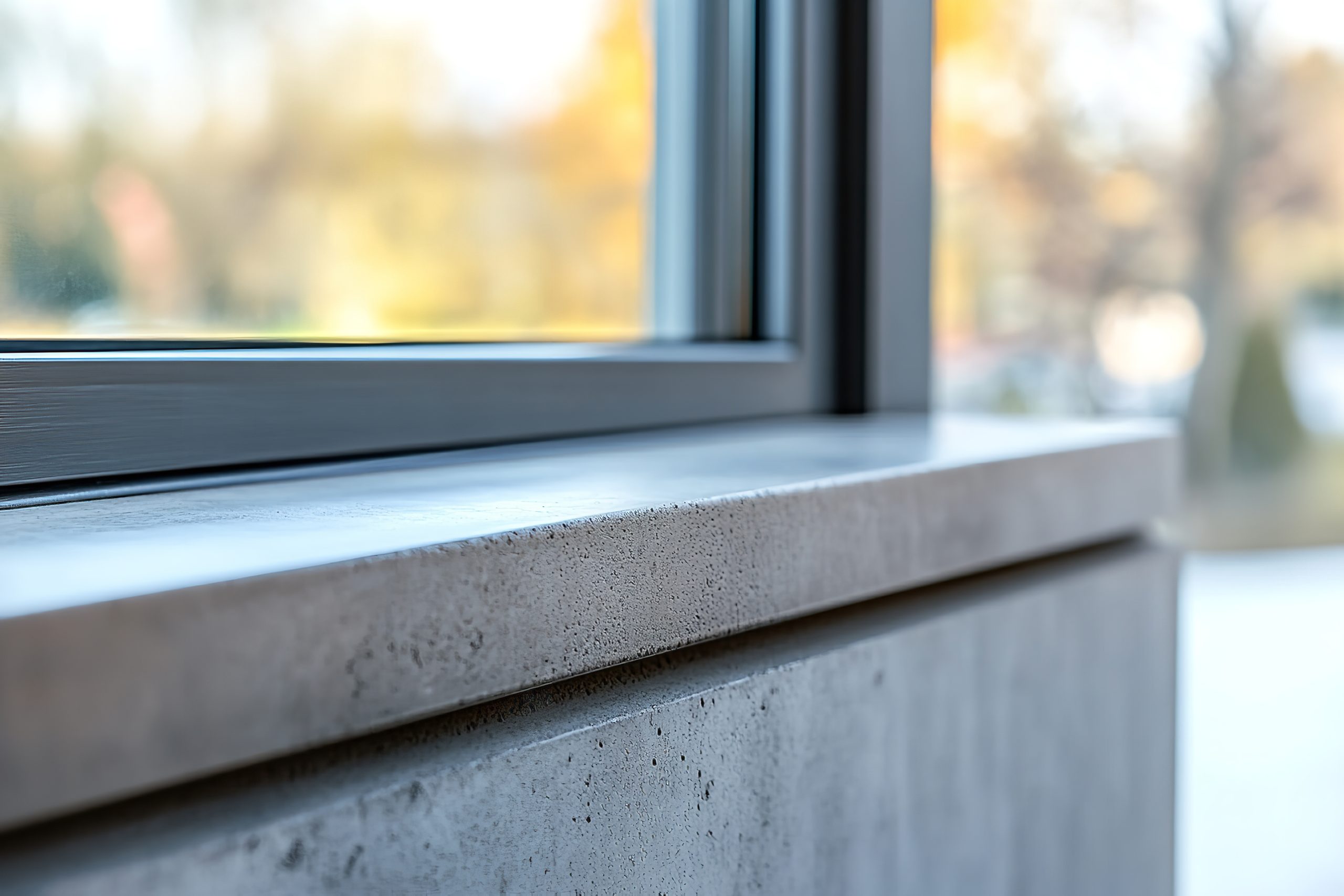
- Durability – Stone window sills are very durable compared with other materials. Natural stone stands up well to all kinds of weather (including heat and frost) and to mechanical damage. It does not react chemically with water, sunlight or air, and it leaves no oxidation marks on facades. Another important point is that it has no internal stresses, so it does not warp. Stone window sills last, often for several decades. This makes them an investment that pays off in the long run.
- Aesthetics – Stone window sills are very attractive. Natural stone has its own patterns and colours – you can choose from shades of white, cream, grey, brown, green and other colours. Because no two patterns are the same, they bring a sense of elegance, naturalness and prestige to your home.
- Easy care – Stains hardly ever form on a stone surface, and when they do, they are easy to clean. In most cases, a soft cloth and warm water are enough. Outdoors, the stone mostly cleans itself through sun and rain.
- More affordable than sills made from most other materials
Granite: the most suitable material for window sills
Of all the types of natural stone, granite is the most common choice, especially for exterior window sills. Its main advantages are strength and high resistance to the weather.
Granite copes easily with rain, snow and frost, and with strong heat too.
Thanks to its low water absorption, it does not crack or change its structure, which is key for outdoor use. It is also very resistant to scratches and mechanical damage, so it keeps its good looks after many years of use.
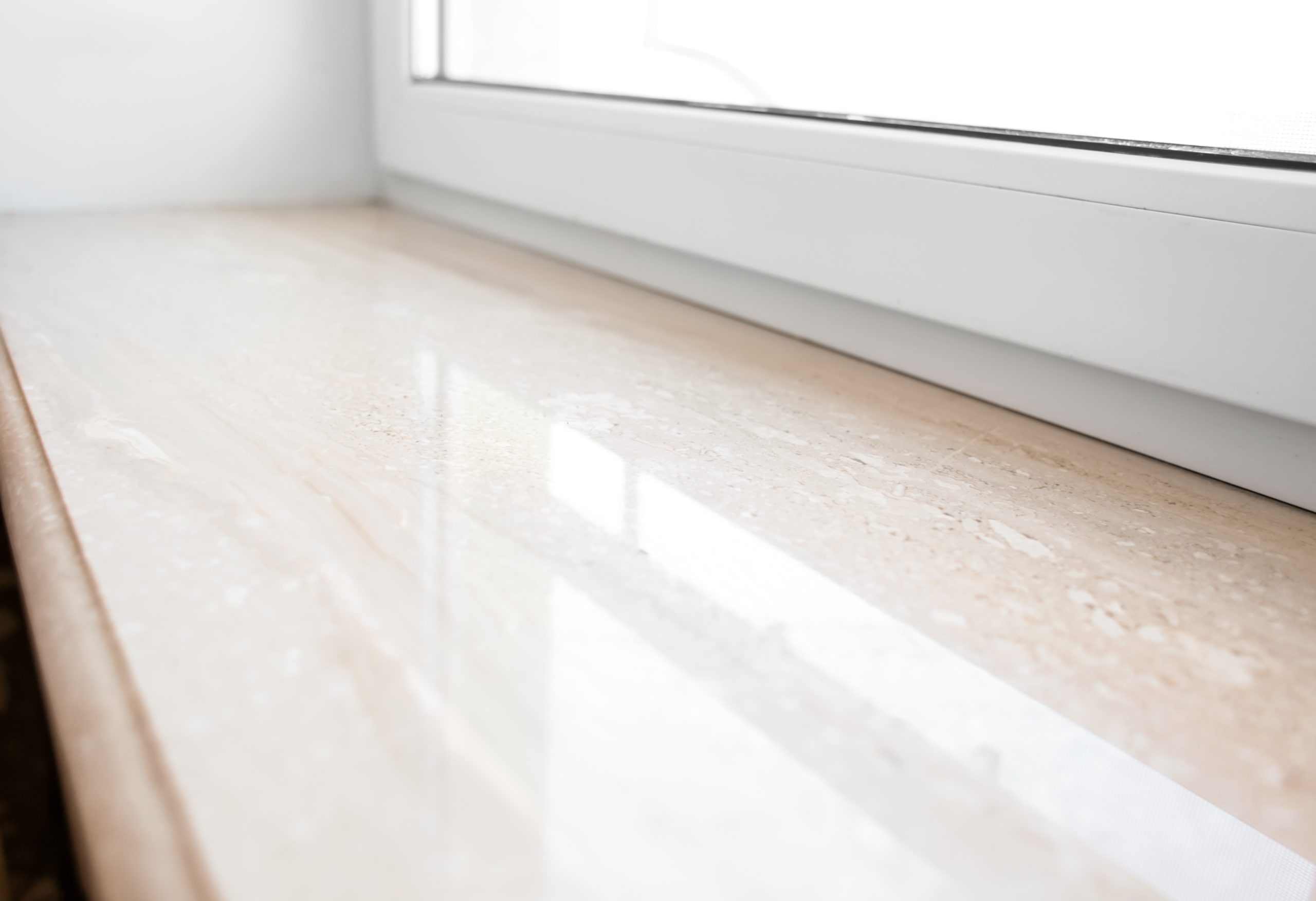
Inside the home, people also often use marble and engineered quartz, which are a little softer than granite but bring a special charm and elegance to the room.
All these natural stones, marble, engineered quartz and granite alike, are very hard-wearing and very easy to look after.
The surface finish is another important point when you choose a stone window sill. A polished finish gives the stone a shiny, elegant look, but scratches and stains show more easily on it.
Matt or slightly textured finishes, on the other hand, are much more practical for everyday use. They hide signs of wear better and need much less care.
Natural stone window sills combine good looks, function and durability. Whichever type of stone you choose, natural stone gives you a long-lasting solution that keeps its value and beauty over the years.