

Choosing floor and wall coverings is one of the more important decisions when you build or renovate your home.
It is a decision about how a room works and what character it has. Natural stone brings a sense of permanence, elegance and connection with nature into your home.
Slate and quartzite are two of the most valued stones. At first glance they look very similar, but in practice they offer quite a different experience.
To help you decide which one suits your home better, below we describe their main features and the advantages and disadvantages of each.
Slate
It is a layered rock that offers many possible uses, both inside the home and around it.
Slate is a natural decorative stone that has long been a very popular building material.
Thanks to its excellent properties, it is also a common choice in contemporary design.
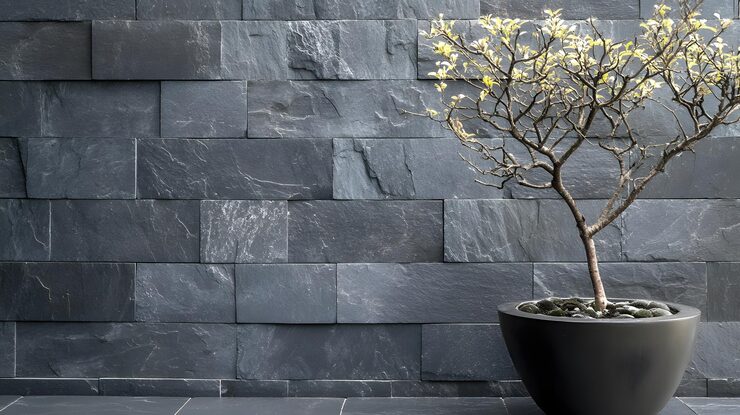
Advantages of slate:
- Its slightly uneven, textured surface gives a natural, rustic look that makes a room feel especially warm.
- It has a non-slip surface, so it is well suited to outdoor areas, terraces, stairs and bathrooms.
- Slate is highly resistant to moisture.
- It is more affordable than other natural stones.
Disadvantages of slate:
- As it is a somewhat more porous natural stone, it needs regular care, including sealing to protect it from stains.
- Its uneven surface can be too rustic for today's contemporary, minimalist interiors.
- Slate has a strongly layered structure, so its edges can start to crumble over time.
Where to use slate
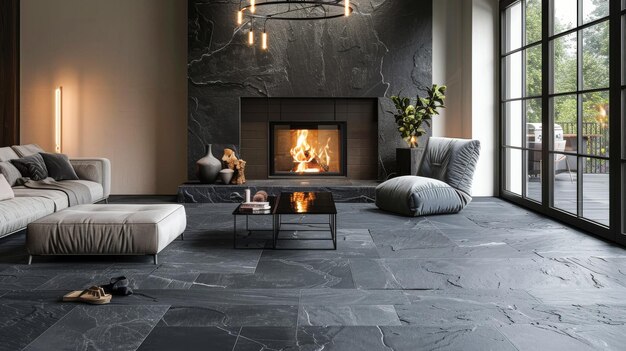
Slate is a very resistant and durable natural stone, so it suits both floors and walls in busy rooms such as bathrooms and kitchens.
A slate floor brings a sense of nature into a room with its attractive look and breaks up any monotony.
A slate stone wall, for example in the living room, will also enrich the space with its understated, timeless look.
Quartzite
It is a very hard metamorphic rock formed from sandstone. Thanks to its properties, you can use it almost anywhere.
Advantages of quartzite:
- Quartzite is one of the hardest rocks, which makes it very resistant to scratches and mechanical damage.
- It is much less porous than slate, so it also resists stains better.
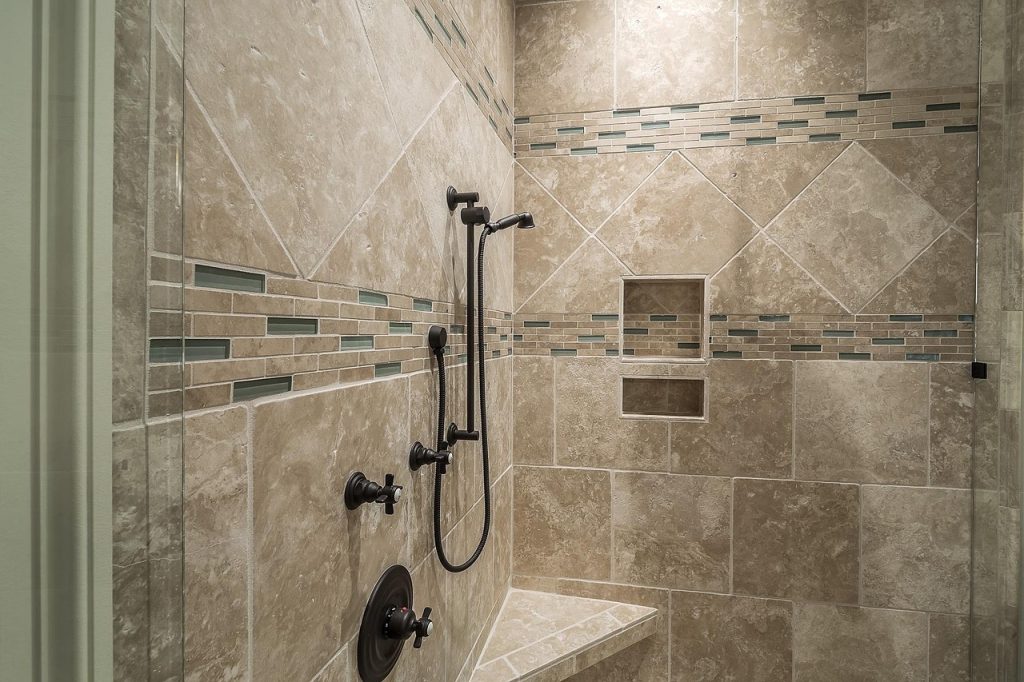
- It has a characteristic elegant look (it comes in lighter tones with soft veining), which makes it ideal for modern and high-end interiors.
- It comes in many shades, so it is easy to combine with almost anything, anywhere.
- It is a durable material with a very long life.
Disadvantages of quartzite:
- It is a little more expensive than slate.
- Its hardness makes it more demanding to work (cut and shape).
- Quartzite is very easy to look after. A soft cloth and warm water are enough to clean it.
Where to use quartzite
As a natural decorative stone, quartzite can be used almost anywhere.
It can be fitted indoors, where a quartzite stone wall rounds off the look of the room. You will also find it on terrace floors, columns and facades, as it is highly resistant to wear and weather.
Thanks to its natural colours, it is also often used as a natural decorative stone in high-end interiors, hotels, office buildings and more.
Slate and quartzite are both excellent choices for floors and walls, but their different properties suit different design and practical needs.
If you want to add lasting beauty to your home, you cannot go wrong with either. What matters is that the material you choose suits the way you use the space and the way you live.