

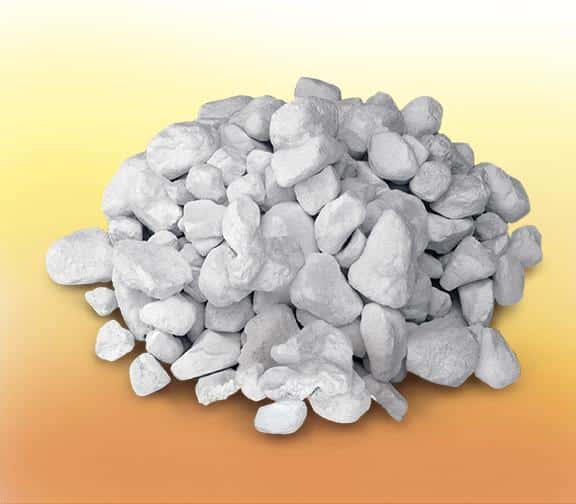
Limestone is a natural stone that people have always used, and it is one of the most widespread rocks in Slovenia.
Because it is a versatile material, it suits both indoor and outdoor surfaces. It is a widespread rock of sedimentary origin with many uses.
How limestone forms
It forms in clean, warm, shallow seas. It consists mainly of calcite and forms in two ways:
- From living organisms in the oceans, such as shellfish, corals and algae. When these organisms die, the waves break them down and carry them to the ocean floor, where they are compressed over millions of years. Limestone forms from these deposits under the pressure of the ocean water.
- Through evaporation. Seawater evaporates and leaves deposits behind. Under high pressure these are compressed and formed into rock.
Care and maintenance of limestone
Because limestone is a porous, soft and chemically sensitive rock, caring for it properly is very important.
Limestone has small pores that need to be sealed, and the sealing must be renewed regularly. This prevents discolouration and stops liquids and dirt getting into the stone.
To clean indoor and outdoor floors made of limestone, use dedicated cleaning products and a soft cloth.
It is also very important to remove stains straight away, as this stops them soaking in. Limestone scratches very easily, so on limestone kitchen worktops always use a chopping board when you cut with a knife, and put the knife down carefully so you do not damage the worktop.

Advantages of limestone
- Aesthetics: Limestone has a warm, elegant look that suits many styles. It also comes in different shades and textures, so there is something for every taste.
- Durability: Properly maintained, limestone can last for decades. Another important advantage is that it copes well with rain, sun and wind, which makes it especially suitable for outdoor use.
- Environmentally friendly: It is an environmentally friendly material, because it comes from nature and contains no harmful chemicals.
- Heat and sound insulation: Its thermal insulation properties help keep the temperature in buildings stable, and its density also helps to reduce noise.
Ways to use limestone on outdoor surfaces
Facades and cladding – Because limestone is very resistant to all kinds of weather, it is often used for facade cladding. It also gives the outside of buildings warmth and elegance.
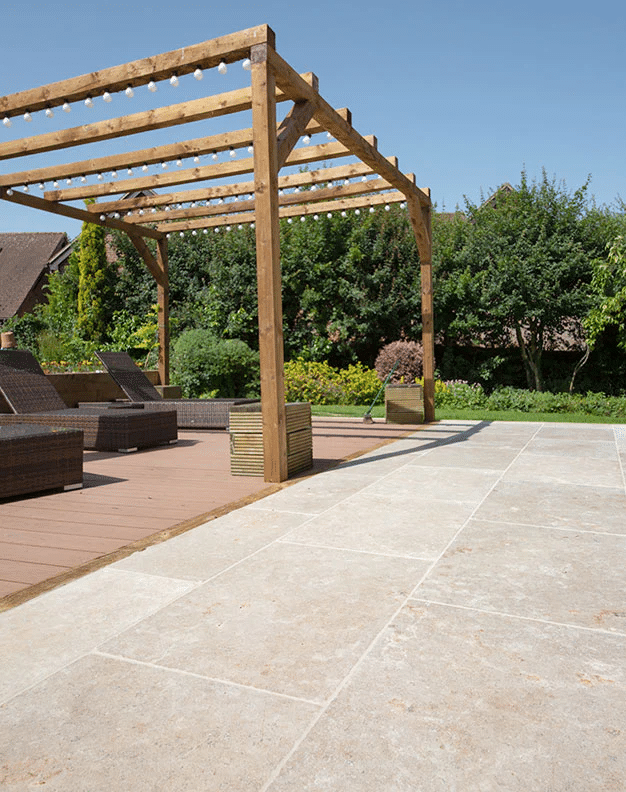
Outdoor stone paving – Limestone suits garden paths, courtyards and terraces, also because it is a very non-slip stone. This gives extra safety, especially in wet conditions.
Walls and fences – The structure of limestone gives a natural look that blends well with its surroundings, so it is also used to build decorative walls.
Fountains and other ornamental features – Limestone is truly versatile. It is also used to make fountains, benches and other ornamental features.
Ways to use limestone on indoor surfaces
Indoor stone floors – The warm range of colours that limestone offers creates a pleasant, homely atmosphere, so it is especially popular for wall and floor cladding in living rooms, bathrooms and hallways.
Kitchen surfaces – Because limestone is a porous material, it needs regular care, but it is still suitable for washbasins, shower enclosures and kitchen worktops.
Fireplace – Because it resists high temperatures, it is also used to clad fireplace surrounds.
Staircase – Limestone gives stairs a special elegance and durability.
Did you know that Washington National Cathedral, the Great Sphinx of Giza, the Pyramid of Khufu and the Parthenon are all built mainly of limestone?
If you have been thinking about using limestone around or inside your home, it will give the spaces where you use it lasting beauty and function.
