

Natural stone is one of the first raw materials people used: first for tools and monuments, and later for building.
Thanks to its durability, strength, resistance and longevity it is still one of the leading building materials today.
You can use it both indoors and outdoors, and if you want it to keep its beauty and function over the years, correct fitting is essential.
Preparing the substrate for natural stone
Keep in mind that there are many types of natural stone, and each has its own limits, which calls for its own approach to fitting.
First of all, the substrate on which you lay the natural stone must be properly prepared. It must be level, clean (free of dust and dirt), dry, firm and, finally, load-bearing, because stone slabs are very heavy.
If there are cracks in the floor, it must be levelled. If you fit natural stone in rooms where there is water (bathroom, kitchen, outdoors), waterproofing is also essential, otherwise the stone can come loose.
If the natural stone is laid outdoors, make sure the outside temperature is above 5 °C.
Choosing and applying the adhesive
Once the substrate is ready, the next step is to apply the adhesive. Choosing the right adhesive matters, and it can differ depending on the use.
For natural stone on floors or walls, you can use a cement-based adhesive. For more demanding surfaces, such as the area around a pool, a two-component adhesive is a better choice.
Apply enough adhesive, as it must not dry too quickly.

How natural stone is fitted
Laying natural stone takes a lot of knowledge, patience and skill. If you are not sure you have all three, contact trained professionals, because the stone needs to be laid without any faults. Only then can it do its job fully.
After the adhesive, which is best applied twice (to the substrate and to the back of the stone), comes laying the natural stone you have chosen.
Before laying, the stone must be dry and clean. You also need to make sure the back of the stone is fully covered with mortar or adhesive, and keep the joints evenly wide.
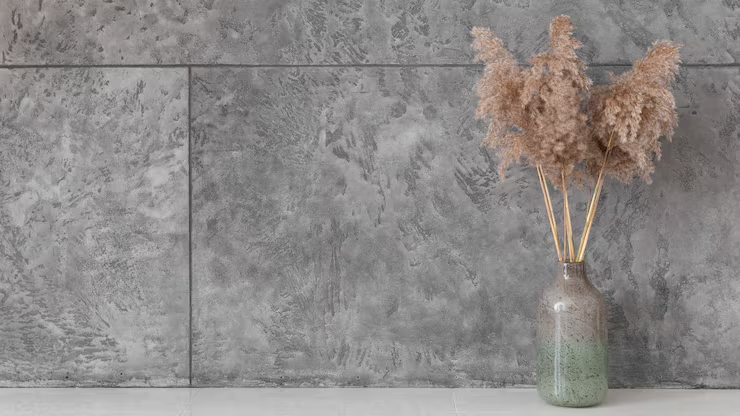
Next comes grouting. When you choose the grout, colour is not the only thing that matters: it also needs to resist moisture and stains.
We recommend always choosing a slightly lighter grout. The most important thing at this stage is to fill the joints evenly.
At the very end (when the grout starts to dry), clean the surface of the stone with a soft sponge, using circular movements.
Care and maintenance of natural stone
To keep the natural stone in your home looking good, it needs the right care.
First sweep the surface or wipe it with a dry cloth to remove any dirt. After that, warm water and a soft cloth are usually all you need.
If any liquid is spilt on natural stone, wipe it up straight away, as it can otherwise leave permanent stains.

Natural stone is a fine material that, fitted correctly and cared for properly, can stay beautiful for decades.
The key to success is a properly prepared substrate, the right adhesive and professional fitting.
A process carried out correctly like this makes sure the natural stone looks good and works as it should.