

Natural stone began to form deep below the earth's surface millions of years ago. Surface and internal pressure together created layers of many natural rocks. When the earth's crust began to cool, it pushed minerals up from its core, which formed many deposits of rock.
What makes natural stone special is that no two pieces are ever the same. Each piece has its own character. The look varies from slab to slab, and that is exactly what gives stone its personality, elegance and charm.
Slate
It is a metamorphic stone that forms from sedimentary rocks under high pressure and temperature, which transforms the original minerals. Slate is known for its layered structure, which means it splits easily into thin, strong slabs.
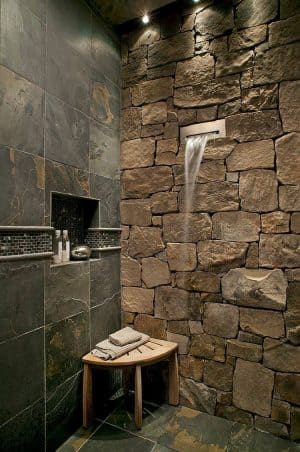
Slate has a natural riven surface. Because it is very durable, attractive and long-lasting, you can use it in many places around the home. Slate slabs suit hallways, entrance halls and staircases as well as courtyards, terraces, driveways and pool surrounds.
Natural slate – Uses
- Construction – In construction it is often used for outdoor and indoor floor and wall cladding. Because it is waterproof, it is also used for roof tiles.
- Stone paving – Slate is very strong and weather resistant, so it is a popular material for terraces, paths and courtyards.
- As a decorative stone – Slate looks attractive and comes in a variety of shades, so it is used for tables, window sills, stone cladding and many other decorative stone products.
- Architecture and art – Slate is very popular in landscape architecture.
Travertine
It is a sedimentary stone with a characteristic porous look that gives it a special texture. It forms over a long time as minerals and other sediments are deposited, which gives its structure the characteristic small air holes.

The fewer of these air holes, the higher the quality of the travertine. Travertine comes in colours from white, cream and gold to brown and red. Its surface has an antique look and brings warmth to the room.
Another advantage is that it is very resistant to differences in temperature. If you use travertine on the facade of your home, we recommend a brushed or honed finish. This brings out its unusual structure and gives a rustic or modern look.
Travertine – Uses
- Construction – Because it is hard-wearing and attractive, it is often used in construction for outdoor and indoor floor and wall cladding, including facades. As it resists wear, it is also used to clad stairs.
- As a decorative stone – It is used for kitchen worktops, washbasins and shower trays. As it resists heat, it is also suitable for fireplace surrounds.
- Outdoor spaces – It is used to pave garden paths, terraces and courtyards. Its naturally slip-resistant surface and resistance to water also make it well suited to pool surrounds.
The main differences between slate and travertine
Both stones have their advantages and drawbacks. Which one you choose depends on the specific needs of the project and what you want in terms of look and function. Both slate and travertine are a wonderful gift of nature. With their variety and rich colours, they bring atmosphere and warmth to a home.
- Slate is a metamorphic rock, while travertine is a sedimentary rock.
- Slate has a characteristic layered structure, while travertine has a characteristic porous structure full of small holes.
- Slate is used for roofing, floor and wall cladding, garden paths and decorative elements. Travertine is better suited to floor and wall cladding, exterior facades, and bathroom and kitchen tops.
- Travertine is more porous than slate, so it needs more maintenance and sealing.
- Slate is harder and more resistant to wear and weather.