

Natural stone is widely seen as the most elegant solution when you want harmony with other materials, a beautiful look and elegance.
It also has an important quality that no man-made material has: it brings a touch of nature and homeliness into a room.
Natural stone is not only beautiful, warm and elegant, but also very practical and versatile.
There are a great many ways to use it, and it can also play an important part in the quality of our living space.
Sound in a room
Did you know that sound is a very important factor in a room and has a big effect on people?
It is a key factor in creating a pleasant and practical living space.
If a room where you spend a lot of time has good acoustics, this can have a positive effect on your well-being and health: on your physical, psychological, cognitive and behavioural state.
Living in a room with good acoustics can encourage the release of certain hormones and have a positive effect on heart rate and breathing.

Natural stone and room acoustics
Natural stone has many advantages over man-made materials, and one of them is that it gives the room it is in excellent sound insulation.
Thanks to its properties, it improves acoustic comfort and is also an excellent insulator against noise from outside.
Its acoustic properties can affect how sound is reflected, absorbed and diffused in a room.
Natural stone is a hard, dense and mostly smooth material, so it absorbs little sound.
This means that when sound meets a stone surface, it is mostly reflected rather than absorbed, which has some important effects:
- In rooms where natural stone dominates, especially granite, sound reflection increases. Sound travels further and can bounce back several times, which means a longer echo. The sound in such a room is rich and full, which is especially welcome in rooms used for music or speech.
- With unworked natural stone and roughly worked or split surfaces, the sound waves are diffused, which can reduce harsh echoes.
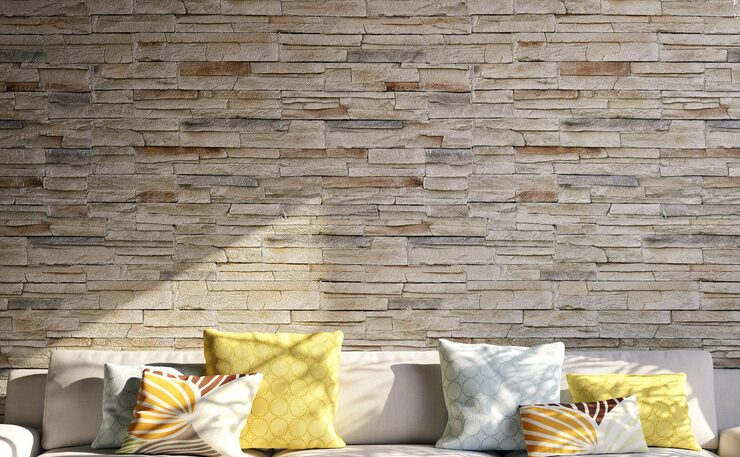
How does this feel in a room?
- Sound usually travels for longer and “fades” more slowly.
- Both speech and music linger for longer.
- If there are very large areas of stone on the walls or floors and no other absorbent materials nearby, such as rugs and curtains, speech is harder to understand.
- It is good to plan the acoustics of a room carefully, so that the sound in it is pleasant to the ear. For good acoustics in a room with natural stone, add a rug and upholstered furniture, and use wood or acoustic panels on the walls or ceiling.
Did you know?
The famous Pula Arena is also built entirely of natural stone, the so-called Istrian limestone. It combines architectural beauty with a special atmosphere.
Natural stone reflects sound, which is not ideal for concerts and speeches, and the Romans did not yet have acoustic elements like the ones we know today. So they built in important architectural features that give the arena excellent acoustics (the oval shape, the open roof, the raised rows of seats and the outer walls with arches).

Natural stone has a strong effect on room acoustics, as its density and hardness mean it mostly reflects sound.
If you combine it thoughtfully with the right materials, it can be the key to good acoustics in a room.
In a room surrounded by stone, it is important to add wood, furniture, curtains and rugs, as this gives the right balance between looks and acoustic comfort.